Don't Starve Together
- 4.0
- Rating
- 10.00K
- Installs
- $9.99
- Price

 Analysis by App-foxy
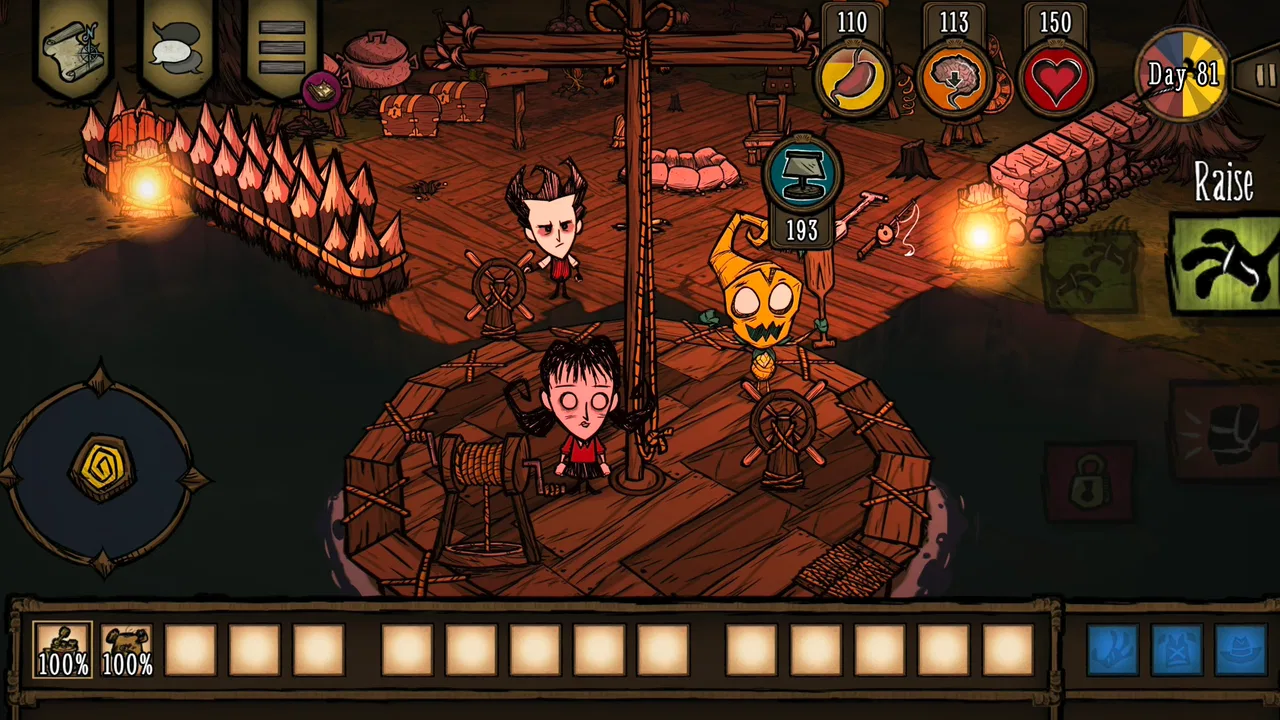
I went into Don't Starve Together expecting a familiar survival adventure, but its strongest quality is not simply that it makes survival difficult. It makes every small decision feel connected. I gather something because night is coming, I build because a safe place matters, I explore because staying still is also dangerous, and then I deal with the consequences when my plan was too optimistic. That chain gives the game its personality.
This is a multiplayer-focused spooky survival game from Playdigious, presented as an adventure experience for players who enjoy learning through mistakes. It is available for $9.99, carries a Teen content rating, and currently appears as version 1.4.0. The game has a 4.0 average from around 2.6 thousand ratings, with more than 10 thousand installs, so it has a modest but clearly interested audience rather than the reach of a casual mobile hit.
Don't Starve Together is best understood as a game of preparation under pressure. It does not constantly hand me obvious objectives or make progress feel safe. Instead, it gives me a hostile world, a few immediate needs, and enough freedom to make choices that either create stability or produce a new emergency. That makes it rewarding for patient players, but frustrating if I want quick victories or a clearly guided story.
You May Also Like

 Pandora - Music & Podcasts
Pandora’s Music Is Easy to Start, but Harder to Recover
Pandora’s strength is its low-effort path from a seed to a station. Its weak spot is how much confidence it asks you to place in connection, setup, and quiet recovery.

 AccuWeather: Weather Radar
AccuWeather Review: A Quick, Clear Forecast for Everyday Decisions
For everyday plans, the best forecast is the one you can understand quickly. AccuWeather makes rain timing, radar, and local conditions easy to act on, with a few trade-offs.

 Hill Climb Racing
Why Hill Climb Racing Still Turns Crashes Into One More Run
A tiny car, a bumpy hill and one more upgrade: Hill Climb Racing keeps resurfacing because its simple chaos makes every near-miss feel personal.

 AliExpress - Shopping App
AliExpress Makes Global Shopping Feel Personal, but Shoppers Bear the Risk
AliExpress turns a global marketplace into a pocket-sized discovery engine. Its reach is useful, its shopping loop compelling, and its trade-offs easy to miss.

 Lords Mobile: Kingdom Wars
Lords Mobile Is a Kingdom-Building Routine, Not a Quick Match
A case-by-case verdict on the building, battles, device demands, and social commitments that make Lords Mobile rewarding for some players and exhausting for others.

 PDF Scanner app - TapScanner
TapScanner Makes Paperwork Easier to Capture, Check, and Share
TapScanner makes scanning with a phone feel less like a rescue operation and more like a dependable step in getting work done. Its capture tools are useful, though not flawless.
More From Our News Desk
View All News


Starting with one useful action
The first meaningful action is usually simple: collect what is nearby and turn it into something that keeps the next danger manageable. That sounds ordinary, yet the game makes the choice matter because time, safety, and resources are always linked. Gathering is not just a chore before the “real” adventure begins. It is the foundation of every later decision.
When I play with another person, that first phase becomes more interesting. We can divide responsibilities, but doing so creates dependence. One player may focus on materials while the other checks the surroundings, prepares food, or looks for a better place to settle. The advantage is speed; the weakness is that a shared plan can fail quickly if both players assume the other person handled an important task.
This is one of the first useful lessons the game teaches without spelling it out: survival is easier when actions have a purpose. Randomly collecting everything in sight can leave me busy but unprepared. A better approach is to ask what the next threat is likely to be and gather for that. If darkness, hunger, or an unfamiliar area is the immediate concern, I should not treat every resource as equally valuable.
That makes the opening feel different from many mobile adventure games. In a more conventional title, the first minutes often exist to teach controls and lead me toward a reward. Here, the reward is usually a safer next few minutes. The game expects me to notice patterns, remember mistakes, and gradually develop a routine that fits the world.
Why the first few minutes can feel harsh
The interface and survival logic demand attention at the same time. I am not only moving through an attractive, strange environment; I am also thinking about what I can carry, what I should make, and whether exploration is worth the risk. That mental load is part of the appeal, but it can make the beginning feel unfriendly.
My advice is to resist the urge to explore as far as possible immediately. Use the early area to learn how the game communicates danger and how quickly a harmless-looking trip can become inconvenient. In multiplayer, agree on a short-term plan before splitting up. A few seconds of coordination can prevent the classic problem where both players return expecting the other to have prepared the essentials.
The game is also better suited to a device and control setup that lets me make deliberate movements. It is not the kind of adventure I enjoy while distracted, because a small input mistake or a missed warning can affect the whole group. Players who want something to play casually in short bursts may find the opening more demanding than expected.
Action, feedback, and the rhythm of a session
The feedback loop is where the game becomes addictive. I act, the world responds, and that response tells me whether my preparation was sensible. A successful trip creates new options. A poor trip creates a problem that must be solved before it grows. The game rarely needs a large reward screen to make progress feel meaningful because the world itself becomes easier to read.
For example, finding useful materials is satisfying not only because I can make an item from them. It changes how confidently I can approach the next area or the next stretch of time. Establishing a workable base is similarly valuable because it turns a dangerous landscape into a place I understand. The reward is practical knowledge and increased control, not merely a number going up.
That rhythm also explains why failure does not always feel unfair. When I lose after ignoring a warning, overextending an expedition, or assuming that one resource would be enough, I usually understand what went wrong. The game turns that understanding into motivation. I begin another session not because I was promised a new prize, but because I want to test a better decision.
Small decisions become long-term plans
One of the less obvious strengths is how the game makes ordinary tasks carry strategic weight. Food is not just something to collect and consume. A route is not just a line between two points. A base is not simply a decorative home. Each choice affects how much freedom I have later.
This is why I recommend planning around fallback options. If I am traveling with another player, we should avoid making a journey that depends on one perfect outcome. Carrying a backup plan, leaving enough time to return, and knowing when to abandon an objective are more useful habits than trying to maximize every trip. The game rewards caution without making caution completely passive.
Multiplayer adds a social layer to the feedback. A mistake can be funny when everyone understands what happened, but it can also become irritating if one player constantly takes risks that the rest of the group must repair. The best sessions I had were collaborative rather than competitive: one person could experiment while another kept the broader situation stable.
That distinction matters when choosing the game for a group. It is a strong fit for friends who enjoy discussing plans and laughing at unexpected setbacks. It is a weaker fit for players who want a relaxed cooperative game where everyone can wander independently without affecting the shared situation.
What the game rewards
The main reward is mastery. I begin by reacting to problems and gradually start anticipating them. A familiar route feels safer because I understand it. A new resource matters more because I know what it can enable. Even a failed attempt can improve the next one if I pay attention instead of treating the reset as wasted time.
There is also a satisfying sense of ownership in creating a workable routine. I am not merely following a quest marker toward a predetermined conclusion. I am deciding what “good progress” means for this particular session. That flexibility is a major reason the game feels personal, especially when playing cooperatively and remembering how a group solved an earlier problem.
At the same time, the reward structure will not suit everyone. Players who need frequent story scenes, obvious unlock notifications, or constant external validation may find the experience too quiet. The satisfaction is delayed and earned through understanding. I have to notice that I am making better decisions; the game does not always celebrate that improvement for me.
When a session goes wrong and why I return
The reset is central to the experience. A session can unravel because preparation was incomplete, because exploration went too far, or because a group made several small compromises that finally became one large problem. The important thing is that the next attempt starts with more knowledge, even if it does not start with the comfort of a guaranteed success.
I like that the reset encourages reflection rather than simple repetition. Before trying again, I can identify the moment when the plan changed from ambitious to reckless. Maybe the group stayed out too long. Maybe we focused on collecting attractive resources instead of securing the basics. Maybe we treated a temporary solution as if it were permanent. Those observations make the next run feel purposeful.
This also creates a useful everyday scenario. Imagine having an evening free with a friend and starting a session after dinner. You decide to spend the first part preparing together, then send one player to investigate while the other maintains the base. The expedition takes longer than expected, the return becomes tense, and the group survives only by changing its priorities. Even if the session ends badly, the next evening begins with a shared story and a concrete adjustment to try.
That is the kind of game this is: the entertainment comes from the chain of decisions, not from completing a checklist as efficiently as possible. A short session can still produce a memorable outcome, but the game becomes more rewarding when I have enough time to settle into its rhythm and learn from the consequences.
Who should be careful before buying
The $9.99 price is reasonable for players who know they enjoy demanding survival adventures, but it is a more serious purchase than a free casual game. The listing also shows in-app purchases ranging from $2.99 to $49.99 per item, so I would review the purchase flow carefully and avoid assuming that the initial price is the only possible spending involved.
The Teen rating is another practical consideration for families. The spooky atmosphere and survival pressure are part of the identity, so this is not the best choice for a young child looking for a gentle crafting game. I would also skip it if I want a straightforward offline-style experience with minimal tension, or if I dislike games where failure can erase the comfort built during a session.
Compatibility is relatively approachable for older devices because the minimum operating system is Android 8.0, but that does not automatically mean every phone will feel equally comfortable. The game asks for attention and precise control, so screen size, performance, and the quality of the input experience can affect enjoyment. I would make sure the device feels responsive before committing to long multiplayer sessions.
How it compares with familiar alternatives
Compared with lighter survival games, this one feels less like a checklist of crafting upgrades and more like a negotiation with the environment. It does not give me the same immediate comfort as a game built around building attractive structures or collecting materials at a relaxed pace. Its tension comes from the possibility that preparation can still be insufficient.
Compared with story-led adventure games, it offers more freedom but less direction. I am not primarily moving from one authored scene to the next. I am creating a sequence of problems and solutions through my own choices. That is excellent for replayability and group stories, but less satisfying if I am buying a game mainly for character development or a carefully paced narrative.
Compared with competitive multiplayer games, the pressure is different. The challenge is not mainly another player trying to defeat me. It is the shared world, the clock, and the consequences of poor cooperation. That makes it more appealing to friends who want teamwork without direct competition, although the group still needs compatible play styles.
One trade-off is that the game may demand more explanation between friends than a typical mobile multiplayer title. A newcomer can learn by playing, but an experienced player who gives too many instructions can accidentally remove the discovery that makes the survival loop satisfying. I recommend agreeing on broad roles while leaving room for the newer player to make decisions and learn from them.
My practical verdict on the survival loop
After spending time with it, I see the core loop as a clean sequence: take an action, read the feedback, gain a useful advantage, face the consequences of the next choice, and restart with better judgement when the plan collapses. The reason another session begins is not a shallow promise of more content. It is the feeling that I now understand enough to do something differently.
Playdigious has a game here that asks for patience and attention rather than constant rewards. Its strongest moments come from preparation that pays off, a risky decision that almost works, or a multiplayer recovery that turns a bad situation into a shared success. Its weakest moments are the same qualities viewed from the other side: the pace can feel severe, failure can be tiring, and a casual group may not enjoy managing the consequences together.
I would recommend it to players who like cooperative survival, unusual worlds, and games that make knowledge more valuable than quick reflexes. I would not recommend it as a default choice for someone seeking a simple pick-up-and-play adventure, a heavily guided campaign, or a low-pressure crafting sandbox.
For me, the purchase makes sense when I have a friend who enjoys planning, experimenting, and laughing at a failed expedition. The game is at its best when we treat each session as a small story: first we prepare, then we take a risk, then the world answers back. If that rhythm sounds exciting rather than exhausting, this adventure has enough depth to keep another attempt feeling worthwhile.
FAQs for Don't Starve Together
01What is Don’t Starve Together, and how does the multiplayer experience work?
Don’t Starve Together is a cooperative survival game where you and other players explore a strange wilderness, collect resources, craft equipment, build a base, and try to survive dangerous seasons and creatures. You can play with friends online or join public worlds, but teamwork is important because players must share supplies, divide tasks, revive fallen companions, and prepare together for increasingly difficult threats.
02Is Don’t Starve Together suitable for beginners?
The game is rewarding but can be challenging for new players. It provides a distinctive art style and plenty of freedom, yet does not explain every survival mechanic in detail. Beginners should expect to learn through experimentation, failure, and exploration. Starting with friends, choosing a forgiving world setup, and learning basic priorities—food, light, tools, shelter, and seasonal preparation—can make the first hours much more enjoyable.
03Can Don’t Starve Together be played solo, or is it only for groups?
Although Don’t Starve Together is designed around cooperative play, you can create a private world and play alone. Solo survival is possible, but it may feel more demanding because you must gather resources, fight enemies, manage your base, and prepare for seasonal dangers without assistance. Playing with friends makes many tasks easier, while solo mode offers a slower and more personal challenge for experienced survival players.
04Does Don’t Starve Together include character differences and progression?
Yes. Don’t Starve Together features a roster of characters with different abilities, weaknesses, and play styles. Some are better at combat, farming, exploration, or supporting the group, while others introduce unique mechanics that change how you approach survival. The game focuses more on learning and improving your strategy than traditional level-based progression, so success mainly comes from knowledge, preparation, teamwork, and better decision-making.
05What should I know about the difficulty, deaths, and in-game purchases?
Don’t Starve Together has a deliberately unforgiving survival system. Hunger, darkness, weather, hostile creatures, and seasonal bosses can all cause death, and careless decisions may erase significant progress unless your team has the right revival resources. The game also offers optional cosmetic content and character-related extras, but these do not replace the need to learn the mechanics. Check the current store listing for platform availability, pricing, and purchase details before downloading.
Pros
- Distinctive hand-drawn art style creates a memorable atmosphere.
- Procedurally generated worlds make each playthrough feel different.
- Many characters offer unique abilities and playstyles.
- Crafting
- farming
- and base building provide plenty of long-term goals.
- Regular content updates and events help keep the game engaging.
Cons
- The learning curve can be harsh for newcomers.
- Death may erase significant progress
- which can feel frustrating.
- Online play requires a stable connection and compatible teammates.
- Some characters and content may require additional purchases.
- The small interface can feel cramped on certain phone screens.

Don't Starve Together
Gallery